Came across this list in Cimatu's blog, thought I'd give it a try. Should have thought twice. Made me feel that I've left out on a lot of things. Anyway, I'll just have to find a way to prevent myself from dying. For the complete list, click.
Here's how I fared.
155. Jazz – Toni Morrison: have one, haven't read it yet
190. Remains of the Day – Kazuo Ishiguro: started it, didn't finish
195. Like Water for Chocolate – Laura Esquivel: at last, something familiar
200. Foucault’s Pendulum – Umberto Eco: was 3/4 through when I gave up. Why? I ask the same question
223. Beloved – Toni Morrison: have one, haven't read it though
230. An Artist of the Floating World – Kazuo Ishiguro: have one, haven't read it
236. Love in the Time of Cholera – Gabriel García Márquez: read it, loved every bit of it
293. The Name of the Rose – Umberto Eco: have one, haven't read it though
303. The World According to Garp – John Irving: have one, haven't read it
314. Petals of Blood – Ngugi Wa Thiong’o: have one, lent it, haven't got it back yet, bought from the SFW in Diliman, it was translated by the late great Monico Atienza (I think)
315. Song of Solomon – Toni Morrison: have one, haven't read it
320. Interview With the Vampire – Anne Rice: read it
324. Autumn of the Patriarch – Gabriel García Márquez: read it
379. The Godfather – Mario Puzo: loved the movie (does this count?)
399. One Hundred Years of Solitude - Gabriel García Márquez: read it, loved every Rosario
402. The Joke – Milan Kundera: have one, haven't read it
423. Arrow of God – Chinua Achebe: have one, haven't read it
437. A Clockwork Orange – Anthony Burgess: saw the movie, disturbingly beautiful, will bite own tongue before reading actual book
456. To Kill a Mockingbird – Harper Lee: read it
461. Naked Lunch – William Burroughs: borrowed one, can't find it anymore, hard read
472. Things Fall Apart – Chinua Achebe: read it, liked it
508. Lord of the Flies – William Golding: saw the film, haven't read the book
521. The Old Man and the Sea – Ernest Hemingway: have a translated version from SWF
547. Nineteen Eighty-Four – George Orwell: read it, bothered by it. Shhh, Big Brother is watching
564. Animal Farm – George Orwell: read it, bothered by it, two feet good, four feet bad.
574. The Little Prince – Antoine de Saint-Exupéry: read it, still can't get it
620. Keep the Aspidistra Flying – George Orwell: have one, haven't read it though
631. Burmese Days – George Orwell: currently reading it, hearting it
698. Mrs. Dalloway – Virginia Woolf: saw the film, haven't read the book
736. A Portrait of the Artist as a Young Man – James Joyce: have one, haven't read it
738. Rashomon – Akutagawa Ryunosuke: saw the Kurosawa (hoping that its screenplay was based on the book)
767. The Jungle – Upton Sinclair: have one, haven't read it
790. The War of the Worlds – H.G. Wells: have one, haven't read it, watched the film instead (sticks and stones...)
837. The Brothers Karamazov – Fyodor Dostoevsky: read it, haven't finished it yet
840. Anna Karenina – Leo Tolstoy: looking for one, partly because of Murakami
861. The Idiot – Fyodor Dostoevsky: have one, haven't read it
867. Crime and Punishment – Fyodor Dostoevsky: read it, bothered still
871. Notes from the Underground – Fyodor Dostoevsky: read it, not finished with it
916. The Fall of the House of Usher – Edgar Allan Poe: read it
953. The 120 Days of Sodom – Marquis de Sade: eyeing to buy one
983. Gulliver’s Travels – Jonathan Swift: read it
992. Don Quixote – Miguel de Cervantes Saavedra: looking forward to own one
995. Gargantua and Pantagruel – Françoise Rabelais: looking forward to own one, due of Bhaktin
I have read/have/want 43 out of 1001. (does wanting it count?)
Could someone do a list of must-read (or must-not-read, right Mr. Cimatu?) filipiniana?
15.5.08
Cheating


12.5.08
Of Shit and Shite
I was browsing through powerbooks last saturday when i came across a familiar name. Eros Atalia, it said. But this time the cover art was different.
My first encounter with Atalia was with Taguan Pung/Manwal ng mga Napapagal (/sa PAgpapatiwakal; great cover art). A writer-friend recommended the read, saying it was the first collection of flash fiction in the Philippines.
Taguan Pung revolves on acculturation within and without the family and how these phenomena/reality/normalcy subjects the individual. From a kid's first time to hold his shit, to honesty and its drawbacks, to a manual on suicide, Atalia managed to grasp abnormality in what we consider normal. The amoral in the moral. To compare Atalia to Bob Ong is to misread/treat his stories lightly. His works are as carnivalesque as Willie Nep.
And all this in under a few hundred words (maybe 250 max per story).
Now you could understand my excitement over seeing the same name on a different book cover. Atalia has released his second collection of shorts/essays under the title Peksman (mamatay ka man) Nagsisinungaling Ako.
Am truly excited.
Wasn't able to buy the book though.
Shite.
For a sampling of Atalia's lies, click. * Eros Atalia teaches Filipino in the University of Santo Tomas. When asked how much he's earning, he'll divert the topic and treat you to mami ("the works," innards and all; yung putok batok). Atalia was (unofficially) declared (as early as his first book) as the heir to Jun Cruz Reyes' short stories throne.
photo taken from http://www.geocities.com/phil_literatura/eros.jpg
10.5.08
Fanny Slumbook
 Hindi madaling maging ina. Lalo pa siguro ang hirap kung iba ang pangangailangan ng anak.
Sa Erick Slumbook (2004) ay binagtas ni Garcia ang pag-unlad ni Erick (at ng sarili na rin) sa larangang familyal at sikososyal. Matiyaga si Garcia, kita/ramdam ito (pag-akda o pangangalaga man ang usapin). Mula sa pagkadiskubre na awtistik nga si Erick, hanggang sa pagkatuto ng ating bida tumipa sa computer, andun sya. Beaming proudly (minsan), ika nga niya. Frustrated (madalas).
Sa kabila nito, hindi kailangan ng awa o hinayang. Dahil wala namang kailangang kaawaan o panghinayangan. Alam ito ni Prof. Garcia. Nalaman ko ito sa kanya.
Ang buhay ni Erick (at ni Fanny na rin; tali ang isa sa isa, sa maraming punto't dahilan) ay naging libro. Mula rito, ang libro ay nabuhay, naging organikong behikulo tungo sa pag-unawa sa awtismo at sa sinasabi ni Virginia Woolf na "angel in the house."
Marahil, para kay Garcia, ang slumbook ay paalala ng kanilang narating, at dapat pang puntahan. At sapagkat ang special child ay bahagi rin ng mundo.
Pero ngayo’y alam na alam na alam ko nang autistic ka, anak. At mula nang malaman ko, ang buhay ko ay waring isang roller coaster ride ng mga emosyon…Gayunman, sasabihin ko pa rin sa iyo nang buong katapatan, paulit-ulit at ilang beses man, sakaling muli akong bigyan ng Lumikha ng pagkakataong tahakin pabalik ang landas ng buhay at pagkatapos ay muli akong magsimula at ngayo’y may opsiyon na akong pumili ng gusto kong gawin at hindi gustong gawin, walang pero-perong hahanapin at tatahakin ko pa rin ang landas patungo sa iyo, anak, susunduin kita at magkahawak-kamay at magkaagapay pa rin tayong maglalakbay.”
(Now I know so very well that you are autistic, my son. And since that day I knew, my life has been one emotional roller-coaster ride… But I tell you with all honesty, and I repeat this over and over, if the Creator would give me the chance to trace back my life and start again, if I were made to choose what to do or not do, I would have no ifs and buts in seeking and taking the same path toward you, my son, I will take you, and hand in hand we will make the journey together.)
~Fanny Garcia
* Si Prof. Fanny Garcia ay manunulat, mananaliksik, higit sa lahat, ina ni Erick. Kasalukuyan siyang tagapangulo sa Departamento ng Filipino sa De La Salle. Ilan sa mga naisulat ang Sandaang Damit (1994) at Apartment 3-A Mariposa St. (1994). Si Erick ay 18 taong gulang na ngayun (ata).
** Sa aking nanay, (na bagama't di ako awtistik ay nahirapan din) xoxo. Ang anghel sa aming bahay.
image taken from http://www.anvilpublishing.com/books.php?cat=010200
9.5.08
Is Waiting a Verb?

Here's a sample courtesy of Wikipedia.
Quelle aubaine ! Une place de libre, ou presque, dans ce compartiment. Une escale provisoire, pourquoi pas ! Donc, ma nouvelle adresse dans ce train de nulle part : voiture 12, 3ème compartiment dans le sens de la marche. Encore une fois, pourquoi pas ?For Thaler: "The verb is like a weed in a field of flowers. You have to get rid of it to allow the flowers to grow and flourish. Take away the verbs and the language speaks for itself."
Fool’s luck! A vacant seat, almost, in that train. A provisional stop, why not? So, my new address in this nowhere train: car 12, 3rd compartment, forward. Once again, why not?
Indeed, why not?
No subject-verb agreement, no worries.
image taken from http://www.freewebs.com/esperanzafrancais/tap3_alamo.gif
6.5.08
On Philippine gay lingo
by Danton Remoto* But they never considered the fact that Philippine gay language is a language of slippages: it sits on a site full of fractures and fissures. Since the 1960s, Tagalog, the mother lode of Filipino, has metamorphosed into another variant called Taglish, or Tagalog English. Taglish has become the language of the educated elite and the middle class. One of its steady sources has been gay language, which has generated so many words and idioms that have been inserted in the mainstream of the everyday Taglish. In fact, since the 1970s, gay language has even become a mediator among the many languages spoken in the country. In a sense, it is like the mestizo, the fair-skinned progeny of the brown, Malay ancestors with the Spanish or American colonial masters. The mestizo speaks Taglish, a mélange of languages which, according to Dr. Vicente Rafael, "evokes yet collapses the colonial relationship. It is the most unstable, and thus the most malleable, of languages." Gay language belongs to this realm. It has the "capacity to disrupt" because of its colorful associations, its elements of parody and spirit of play, its sheer jouissance. Moreover, Dr. Rafael adds it is capable of "embodying the possibilities of language." Read the full article here. *Remoto is one half of the editors that made the Ladlad series possible. The third deviation is now available (daresay nationwide?). Nice cover art don't you think? Wondering who the artist is.

5.5.08
Sirit na!
 I already started with U Eliserio's second published book, Di Lang Anghel ("finish" with Sa Mga Suso ng Liwanag). The introduction promised of Gaiman influence. Am not really fond of Gaiman, but I think we're in the same page when it comes to ethics and human (/cosmic?) behavior. The complexity of behavior dressed in simple "anti-social" acts.
It was getting to be an interesting read, however, sleep demanded its turn. Anghel requires active reading (much like Prof. Lumbera's endorsed "reading" of a movie). Stubbornly persevering through the pages would only be folly.
I did that with Suso and look where it got me. I still couldn't figure out who killed Sando.
Unless some angel bring light to the mystery, looks like I have to re-read Suso.
By the way, I bought my copy of Di Lang Anghel from a used book shop behind Palma Hall. I envy the manong there (forgot his name). The way he recommends books, it's as if he's read every last one of them. And I mean read. He even measures/gauges/probes your preferences to give appropriate recommendations.
Their pricing is relatively manageable. More importantly, the books (most of them, anyway) sold there are in good condition. I just wish they get their hands on more Filipino books.
Image taken from http://ueliserio.blogspot.com/
2.5.08
An Enemy of the Society is Born*
September 13, 1903 ~ March 24, 1970
The last time I saw Amang, he said he was going through the final draft of his latest work (tentatively titled "Amado"). That was in the summer of 2007. He finished his first draft when he taught in UP Baguio for the first semester of 2006-2007.
The work is a biography of Amado Hernandez, national artist and known labor leader. Amang probed Amado's life, discovering angles that "humanizes" what most would consider a "Leyendo."
Halina also helped in the psychoanalysis of Amado's childhood.
I don't know if it's already done. Haven't heard nor contacted Amang for a time.
Wonder what he's up to.
*title of one of Amado's short stories.
picture taken from http://images.google.com/imgres?imgurl=http://www.globalpinoy.com/ch/images/ch_nationalartists/AmadoHernandez.jpg&imgrefurl=http://www.globalpinoy.com/ch/ch_nationalartists_sub.php%3Fname%3DAmado%2520V.%2520Hernandez%26category%3DLiterature&h=150&w=150&sz=21&hl=en&start=1&sig2=FuZIr7ItrPsh-pSoxZKDag&tbnid=QFbHGNQqzVKfNM:&tbnh=96&tbnw=96&ei=iWEaSKylIZvu6QPKpvz3Cw&prev=/images%3Fq%3Damado%2Bhernandez%26gbv%3D2%26hl%3Den%26sa%3DG

30.4.08
Tulad ng Dati

Instead, I opted to finish the second book from the Sword of Truth series. Halina recommended the read. I'm really thankful she didn't give up encouraging me to start with the series.
Forget about Tolkien. Goodkind's take on religion, ethics and human nature is refreshing and surprisingly objective. I particularly like this line from the second book, The Stone of Tears:
"It does the sheep no good to preach the goodness of a diet of grass, if the wolves are of a different mind."
Haven't started with Eco's, How to Travel With A Salmon, though. (Was I "traumatized" by Foucault's Pendulum?)
I should probably buy a copy as soon as I have the moolah (whatdaf?!). It would really be unfair to Kuya Ben and Halina if I just "wikied" it. Or is it? Hmmm.
It is.
picture taken from http://i3.iofferphoto.com/img/item/303/190/91/Terry_Goodkind.jpg
26.4.08
I Badly Need To Read, Badly...
I was browsing through Frank Cimatu's blog when I came across this list titled "The Cult Classics." I felt small after scanning the titles, having read only a fraction (2 out of 50) of what a "respectable" writer would consider "classics." I don't even have half of the recommended titles.
Something's seriously wrong with my library.
Here's the list.
Slaughterhouse-Five by Kurt Vonnegut (1969)
The Alexandria Quartet by Lawrence Durrell (1957-60)
A Rebours by JK Huysmans (1884)
Baby and Child Care by Dr Benjamin Spock (1946)
The Beauty Myth by Naomi Wolf (1991)
The Bell Jar by Sylvia Plath (1963)
Catch-22 by Joseph Heller (1961)
The Catcher in the Rye by JD Salinger (1951)
The Celestine Prophecy by James Redfield (1993)
The Dice Man by Luke Rhinehart (1971)
Chariots of the Gods: Was God An Astronaut? by Erich Von Däniken (1968)
A Confederacy of Dunces by John Kennedy Toole (1980)
Confessions by Jean-Jacques Rousseau (1782)
The Private Memoirs and Confessions of a Justified Sinner by James Hogg (1824)
Dianetics: the Modern Science of Mental Health by L Ron Hubbard (1950)
The Doors of Perception by Aldous Huxley (1954)
Dune by Frank Herbert (1965)
The Hitchhiker’s Guide to the Galaxy by Douglas Adams (1979)
The Electric Kool-Aid Acid Test by Tom Wolfe (1968)
Fear of Flying by Erica Jong (1973)
The Female Eunuch by Germaine Greer (1970)
The Fountainhead by Ayn Rand (1943)
Gödel, Escher, Bach: an Eternal Golden Braid by Douglas R Hofstadter (1979)
Gravity’s Rainbow by Thomas Pynchon (1973)
The Holy Blood and the Holy Grail by Michael Baigent, Richard Leigh and Henry Lincoln (1982)
I Capture the Castle by Dodie Smith (1948)
If on a Winter’s Night a Traveller by Italo Calvino (1979)
Iron John: a Book About Men by Robert Bly (1990)
Jonathan Livingston Seagull by Richard Bach and Russell Munson (1970) - read it
The Magus by John Fowles (1966)
Labyrinths by Jorge Luis Borges (1962)
The Leopard by Giuseppe di Lampedusa (1958)
The Master and Margarita by Mikhail Bulgakov (1967)
No Logo by Naomi Klein (2000)
On The Road by Jack Kerouac (1957)
Fear and Loathing in Las Vegas by Hunter S Thompson (1971)
The Outsider by Colin Wilson (1956)
The Prophet by Kahlil Gibran (1923) - have one, haven't read yet
The Ragged Trousered Philanthropists by Robert Tressell (1914)
The Rubáiyát of Omar Khayyám tr by Edward FitzGerald (1859)
The Road to Oxiana by Robert Byron (1937)
Siddhartha by Hermann Hesse (1922)
The Sorrows of Young Werther by Johann Wolfgang von Goethe (1774)
Story of O by Pauline Réage (1954)
The Stranger by Albert Camus (1942)
The Teachings of Don Juan: a Yaqui Way of Knowledge by Carlos Castaneda (1968)
Testament of Youth by Vera Brittain (1933)
Thus Spoke Zarathustra by Friedrich Wilhelm Nietzsche (1883-85)
To Kill a Mockingbird by Harper Lee (1960) - read it
Zen and the Art of Motorcycle Maintenance: an Inquiry into Values by Robert M Pirsig (1974)
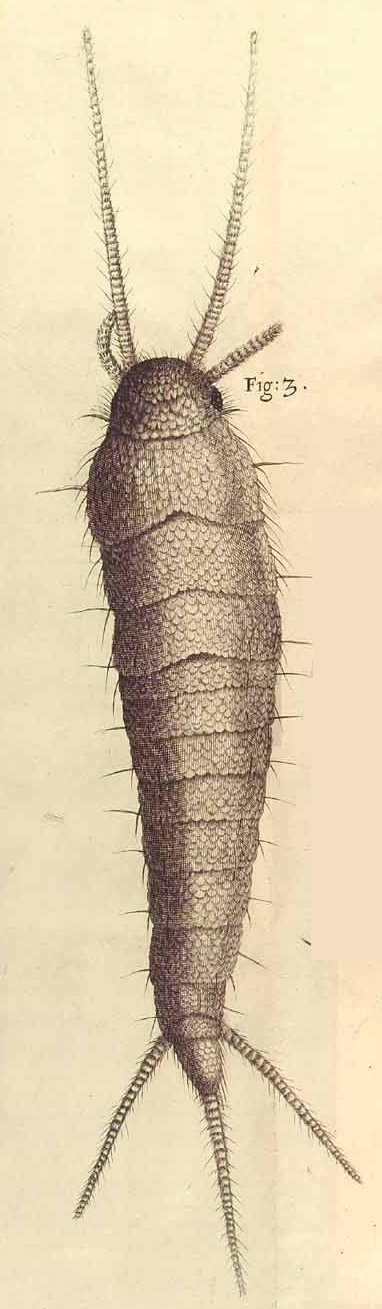
image taken from http://www.kisc.meiji.ac.jp/~mmandel/recherche/grafik/micrographia-bookworm.png
18.4.08
Why Should The "O" Have All The Fun?
Halina, me, and a friend are forming a reader's circle. I very much heart the idea. It’ll be a productive distraction from the oppression institutions call work.
We named our group the “Maginhawa Book Club.” Pedestrian, yes. But it has a nice, humble ring to it.
Our first book - Umberto Eco’s How to Travel with a Salmon.

image taken from http://images.barnesandnoble.com/images/16040000/16042384.JPG
nahatak ng sentro de grabedad

- Pasyon, Emmanuel C.
- Si E ay patuloy na nagtatangkang tapatan ang pinakamabangis na dance move ni Michael Jackson (mangyaring tingnan ang larawan sa profile). [He's bad, he's bad, you know it.]


